Archives
- 2026-09
- 2026-08
- 2026-07
- 2026-06
- 2026-05
- 2026-04
- 2026-03
- 2026-02
- 2026-01
- 2025-12
- 2025-11
- 2025-10
- 2025-09
- 2025-03
- 2025-02
- 2025-01
- 2024-12
- 2024-11
- 2024-10
- 2024-09
- 2024-08
- 2024-07
- 2024-06
- 2024-05
- 2024-04
- 2024-03
- 2024-02
- 2024-01
- 2023-12
- 2023-11
- 2023-10
- 2023-09
- 2023-08
- 2023-07
- 2023-06
- 2023-05
- 2023-04
- 2023-03
- 2023-02
- 2023-01
- 2022-12
- 2022-11
- 2022-10
- 2022-09
- 2022-08
- 2022-07
- 2022-06
- 2022-05
- 2022-04
- 2022-03
- 2022-02
- 2022-01
-
Targeting the BCR is the ideal strategy to
2024-05-08
Targeting the BCR is the ideal strategy to identify the antigen reactive B cells. However, there is concern that B cells could be activated when BCR are bound and cross-linked by antigens, a possibility that is obviously negative for the treatment of autoimmune disease. Proby et al. (2000) tried to
-
Another open question is whether
2024-05-08
Another open question is whether GABA and ACh are released from the same synaptic vesicles, or even the same presynaptic terminals. Multi-transmitter neurons may either function through co-release, in which multiple neurotransmitters are packaged into the same presynaptic terminal and are therefore
-
However although in vitro studies in heterologous
2024-05-08
However, although in vitro studies in heterologous systems have provided very important indications of potential novel pharmacology, the studies with endogenous receptors in native tissues are essential to provide evidence for GPCR heteromerization in vivo and to confirm its physiological relevance.
-
The gene SRD A encodes the reductase enzyme
2024-05-08
The gene SRD5A2 encodes the 5-α-reductase enzyme, which converts testosterone into dihydrotestosterone. Although dihydrotestosterone levels are considerably lower than testosterone, dihydrotestosterone has a five-fold stronger binding capacity to the androgen receptor and, thereby, a considerably mo
-
Additionally we used the predicted Cyp a b
2024-05-07
Additionally, we used the predicted Cyp19a1b amino Bindarit australia sequence from a number of bony fish species to infer their genetic relatedness and found that R. quelen occupies an ancient position within the Siluriformes group. A phylogenetic tree was constructed and it included both full-len
-
Mitochondria are key organelles involved in the
2024-05-07
Mitochondria are key organelles involved in the mechanism of apoptosis (Xiong et al., 2014), and loss of ΔΨm is an important marker associated with mitochondrial dysfunction and cell death. We found that Mino induced ΔΨm impairment and nuclear fragmentation in Jurkat Letrozole in a concentration-de
-
br Introduction Hepatocellular carcinoma HCC is
2024-05-07
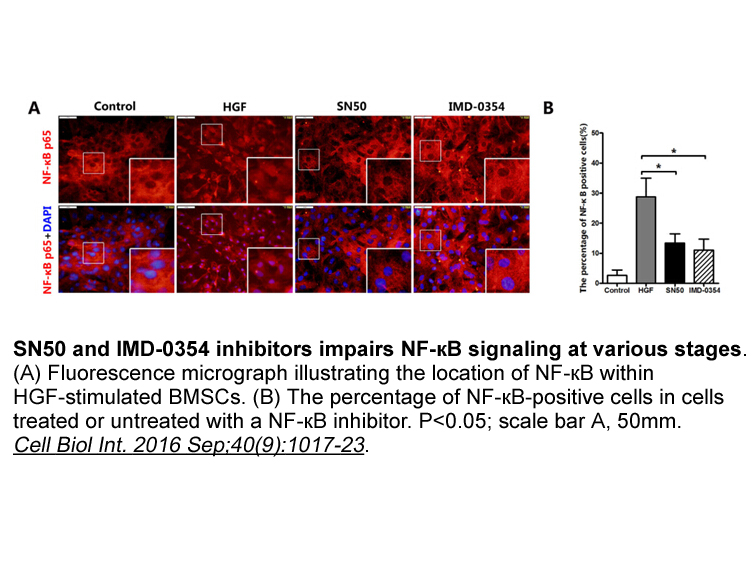
Introduction Hepatocellular carcinoma (HCC) is an aggressive and malignant cancer detected in clinical practice, as it is the third key reason of tumor-related deaths worldwide, with > 800, 000 mortalities every year (Torre et al., 2015). Current treatments for HCC are surgical therapy, liver tra
-
Although the role of apelin and APJ receptor in
2024-05-07
Although the role of apelin and APJ receptor in cardiovascular functions has been well-elucidated, little is known for the effect of the central apelinergic system on gastrointestinal (GI) functions. In mice, it has been found previously that central exogenous apelin-13 decreased gastric emptying (G
-
azidothymidine It has been proven that genetic polymorphisms
2024-05-07
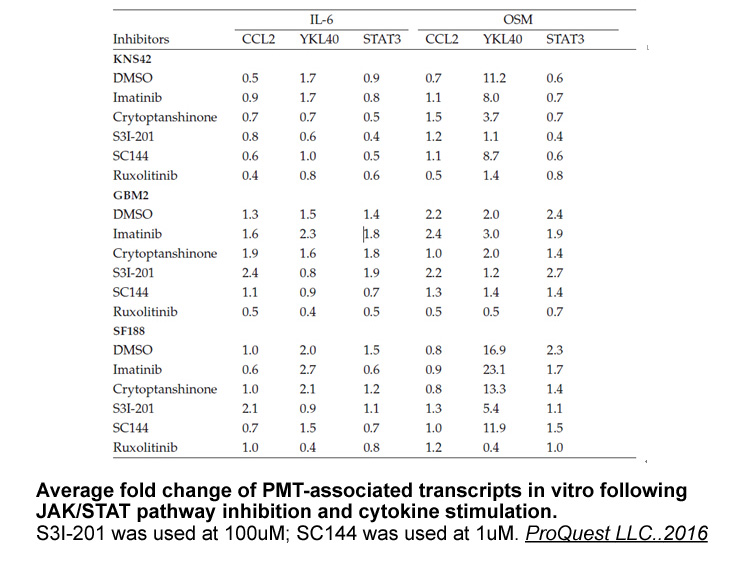
It has been proven that genetic polymorphisms can play an important role in development of hypertension and CVDs. In a Turkish population-based study, it was found that the APLNR gene (rs948847-A445C) polymorphism was not associated with coronary artery disease (CAD), but it was shown to be related
-
Androgen receptor translocates from the cytoplasm
2024-05-07
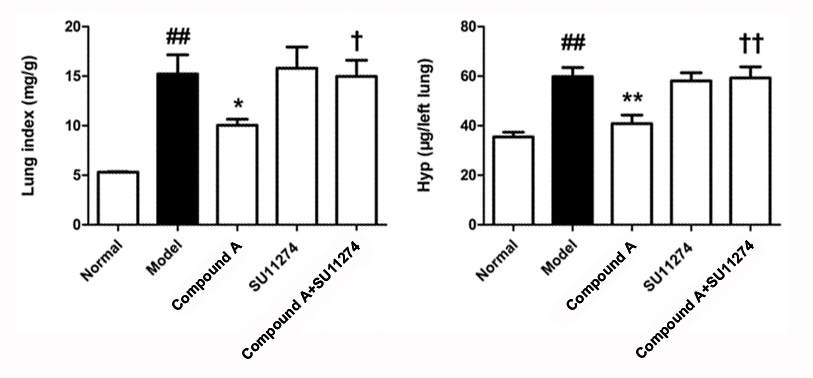
Androgen receptor translocates from the cytoplasm to the nucleus after binding to its ligands (Quigley et al., 1995). In the current study, although propofol did not significantly affect total androgen receptor protein levels, it significantly decreased nuclear androgen receptor levels. These findin
-
The loss of synaptic proteins such as
2024-05-07
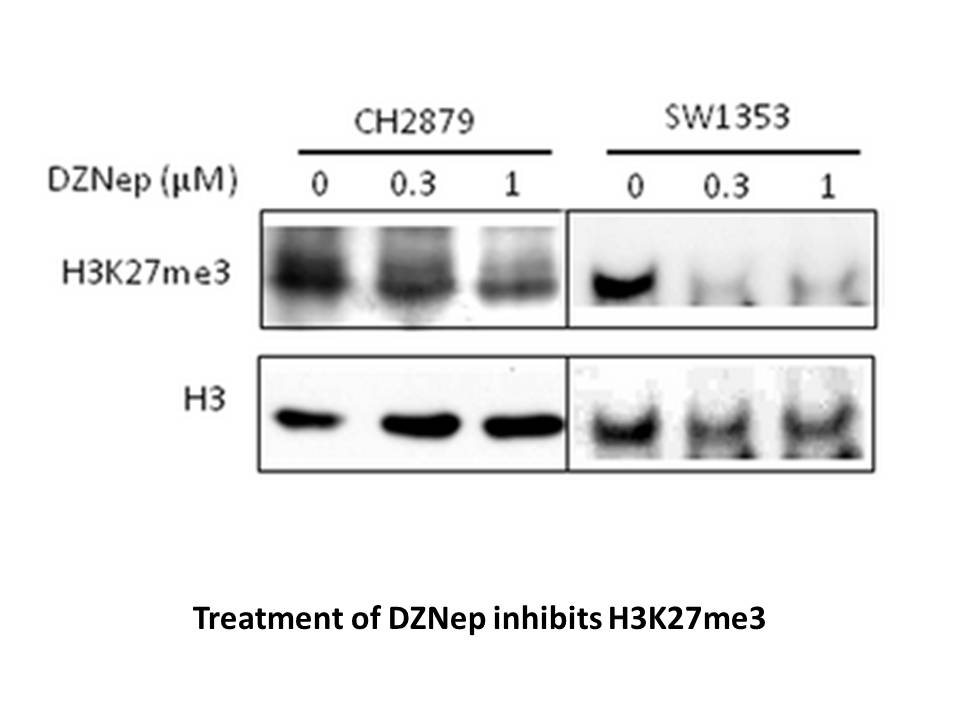
The loss of synaptic proteins such as synaptophysin from the Sotalol sale is indicative of synapse degeneration and provided a good correlate of the degree of dementia in AD [12], [13], [14]. Consequently, the loss of synaptic proteins from cultured primary neurons incubated with Aβ provides a usef
-
The expanding catalog of glutamate receptor auxiliary
2024-05-07
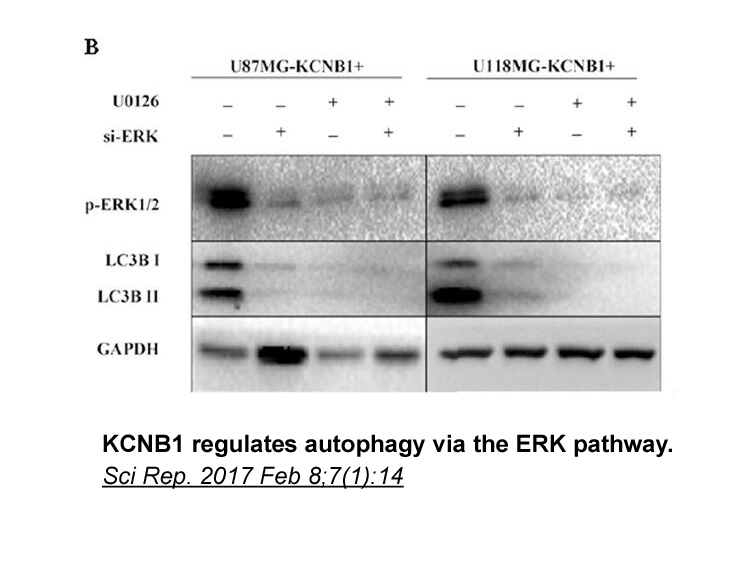
The expanding catalog of glutamate receptor auxiliary subunits and associated transmembrane proteins underscores the importance and complexity of the receptor complexes. Whereas the interactions described here specifically control AMPARs, distinct auxiliary subunits, Neto-1/2, modulate neuronal kain
-
Spectroscopic techniques are powerful biophysical tools used
2024-05-07
Spectroscopic techniques are powerful biophysical tools used in the study of biomolecular structures, including those of proteins. UV–Vis 777 symbolism mg spectroscopy makes use of absorption property of the protein peptide backbone at around 218 nm, and aromatic amino acid residues primarily at ar
-
There is a growing literature on ABCA
2024-05-07
There is a growing literature on ABCA2 expression in human biopsies, where it has been described as a potential biomarker of leukemias. In childhood T-cell acute lymphoblastic leukemia, ABCA2 and ABCA3 were expressed at high levels, which upon treatment with methotrexate, vinblastine and doxorubicin
-
Sperm total motility and hyperactivated motility are
2024-05-07
Sperm total motility and hyperactivated motility are mediated by PLD-dependent bromfenac polymerization [20]. Reduction of PIP2 synthesis inhibited actin polymerization and motility, and increasing PIP2 synthesis enhanced these activities. Furthermore, sperm demonstrating low motility contained low
8490 records 181/566 page Previous Next First page 上5页 181182183184185 下5页 Last page